
The job is done. The customer is happy. They said they would pay.
That was three weeks ago.
Now you are lying awake doing sums, and the awkward part is you cannot even remember exactly what you agreed. It was a voice note. Or a chat in the driveway.
Here is the thing nobody tells you when you start out. Doing the work is only half of getting paid. The other half is the paperwork, and most one-person businesses lose money there rather than on the job itself.
Why an invoice is not a reminder
An invoice is not you asking nicely. It is a record of what was agreed, and it is the thing you point at when there is a disagreement.
Which means a number sent on WhatsApp is not an invoice. It is a message.
If you ever need to chase that money properly, a message will not help you. A document with a number, a date, the work listed and payment terms on it will.
What has to be on it
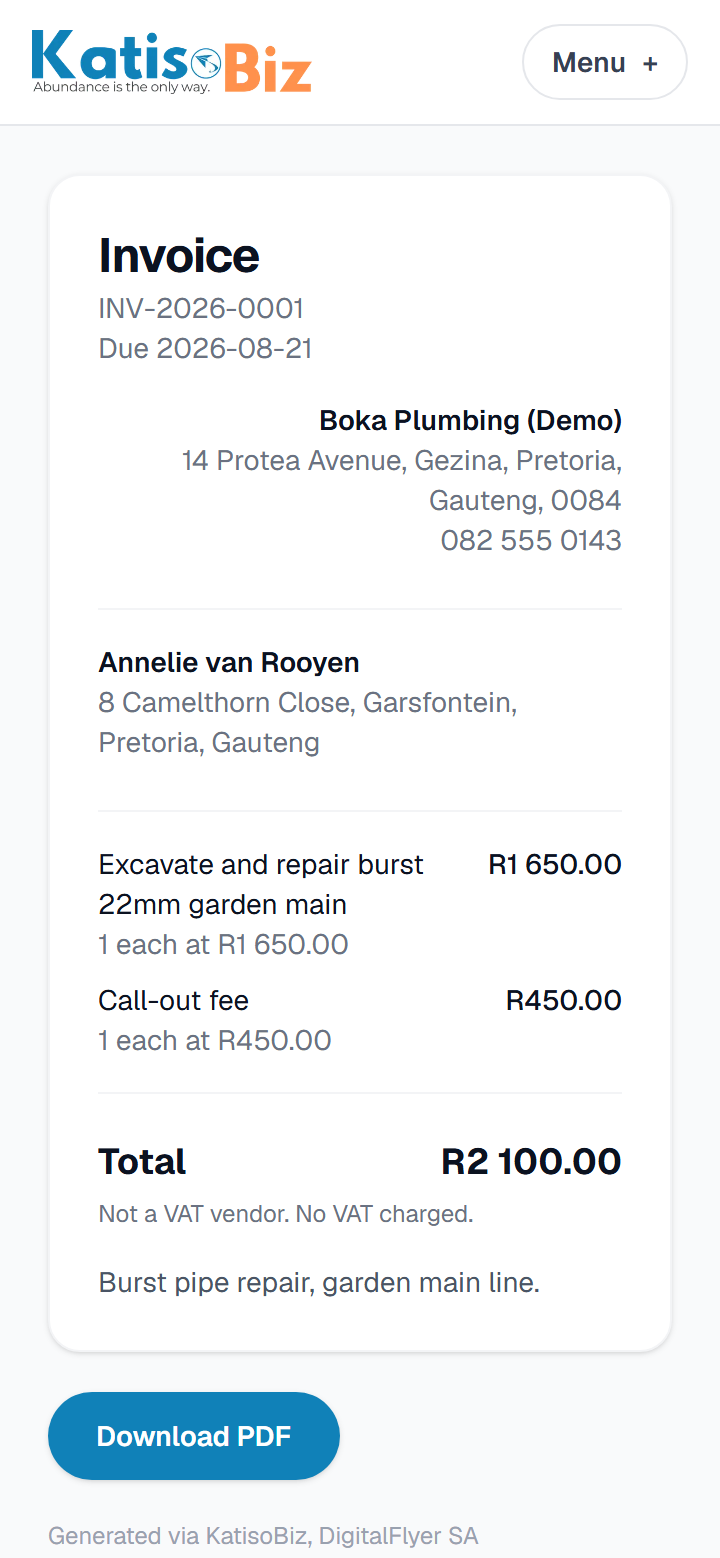
Your business name, number and email. If they have to hunt for your details to pay you, you have made it slower.
Their name and details. The person or business being billed.
An invoice number and a date. Sequential. 0043 comes after 0042.
The work, line by line. The same lines as the quote, ideally identical, so there is nothing to argue about.
The total, with VAT shown separately if you are registered. If you are not registered for VAT, do not put VAT on anything. This is not a small thing.
Your banking details. Right there on the document, not in a separate message.
When it is due. On receipt, seven days, thirty days. Pick one and write it down. "Please pay when you can" is how you end up waiting three weeks.
The bit that saves the most time
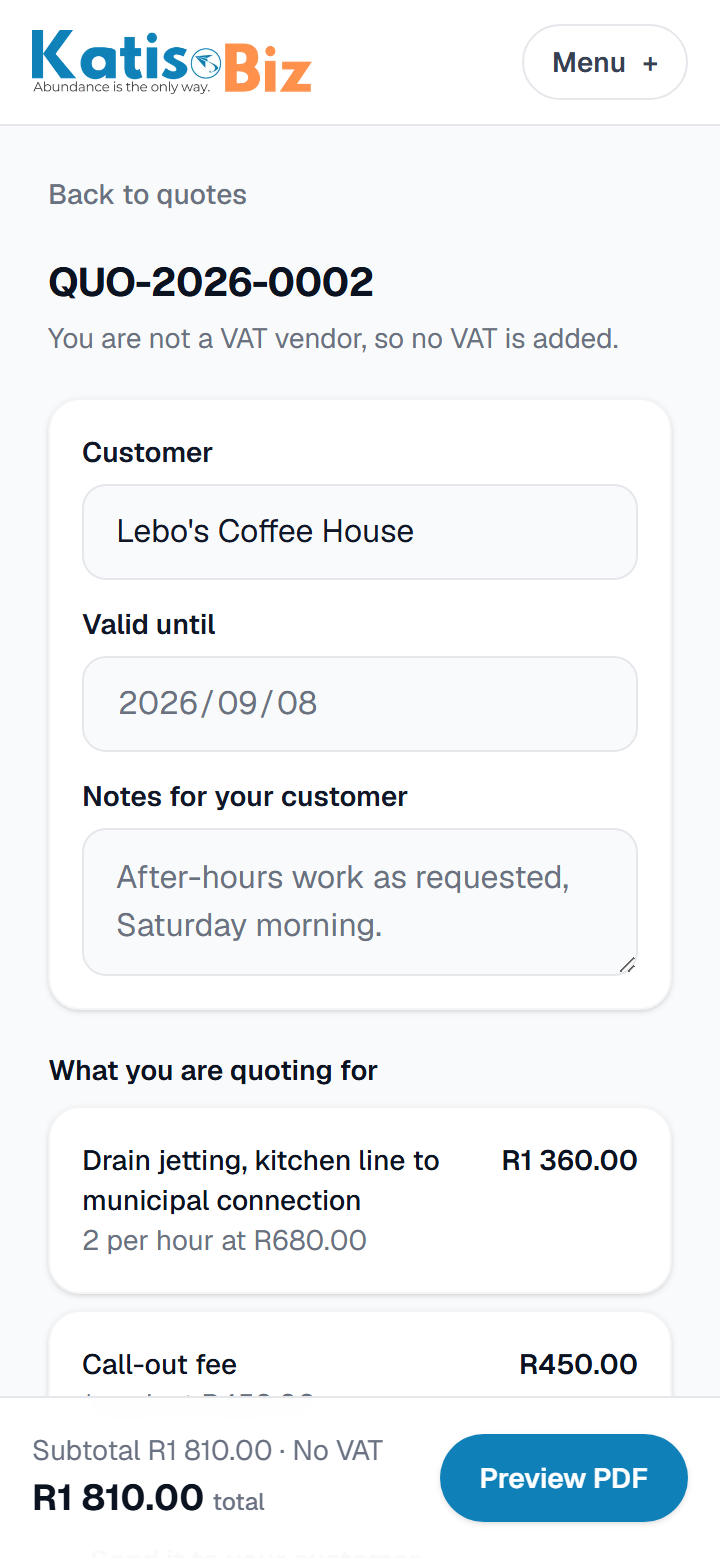
Your invoice should not be typed from scratch. It should be the quote they already accepted.
Same lines, same prices, same wording, one tap. Nothing retyped, nothing mismatched, no chance of a number changing between the two documents.
That is the single biggest time saving in the whole job, and almost nobody sets it up.
Make it easy to pay you
Most late payment is not people refusing. It is people meaning to and forgetting.
So remove every step between them reading the invoice and the money leaving their account.
Banking details on the document. A payment link they can tap. No hunting, no asking you to resend anything.
When the customer pays you, it goes into your own bank account, through your own payment setup. Nobody holds your money on the way.
Chasing without losing the customer
Nobody enjoys this part. Here is a way that works and does not burn the relationship.
Day one after due. A short message. Friendly. Just checking the invoice arrived and asking if there is anything they need from you. Nine times out of ten this is enough, because they simply forgot.
Day seven. Resend the invoice itself. Not a complaint, just the document again with the due date visible.
Day fourteen. Phone them. Not a message. A call is harder to ignore and it is also harder to be unpleasant on, for both of you.
After that. Stop guessing and get advice. There are proper routes for recovering money owed, and they are not something to work out from a Facebook post.
The habit that prevents most of this: send the invoice the day the job finishes. Not at month end. The longer the gap between the work and the invoice, the weaker your position feels to both of you.
The honest summary
You are not bad at business because you struggle to chase money. Almost everybody does.
Send it the same day. Put everything on it. Make paying easy. Follow up on a schedule instead of when you get cross.
KatisoBiz turns an accepted quote into an invoice with one tap, and your customer pays you directly. Free for your first ten documents a month. After that it is R49 a month for 75 documents, or R89 unlimited.